

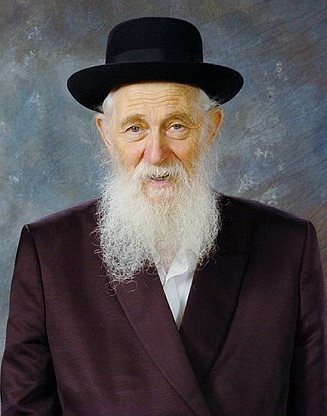
The life and legacy of Rabbi Moshe Greenberg, o.b.m.
Rabbi Moshe Greenberg was born to his parents Reb Naftalie and Rochel in the spring of 1927 near Kishnev, Moldova. Naftalie was a Shochet (ritual slaughterer) and a mohel and Rochel was very active in the communal charity organiztions. It was a family of five. Zecharya the oldest followed by Moshe, a younger brother Yosef and two sisters Zisel and Chaya.
In the summer of 1941 the Nazis occupied their town. They rounded up the Jews and late one night forced them into a house assuring them that they would return the next morning to kill them. A gentile neighbor opened the door to the house and urged them to flee.
The family ran through the forest for a few days and finally boarded a train traveling east deep within Soviet territory. Due to extreme starvation and disease their mother Rochel did not survive the journey. They reached Tashkent, Uzbekistan together with thousands of Jewish refugees. There they discovered an impressive underground network of Jewish elementary schools and Yeshiva’s under the auspices of the local Chabad community.
The young Moshe enthusiastically pursued his studies in the Chabad Yeshiva and became an ardent Chabad Chossid. Tragically, Reb Naftalie drowned in the river a short time later and the young family was bereft of both parents. At the wars end, the Soviet authorities granted all foreign refugees the opportunity to leave the Soviet Union. This window of opportunity was short lived and by the time Moshe attempted to make the journey, the Iron Curtain was firmly shut.
Life as a Jew in communist Russia was unbearable so a small group of Yeshiva students hired a smuggler to take them across the border. The smuggler pocketed the money and turned them in to the authorities. Thus began a new saga in his life.
The communists interrogated and subjected him to excruciating torture in the hopes of extracting information about other Chasidic activists. No matter the pain and abuse he did not relent to the pressure. He was charged with treason and sentenced to 25 years of harsh labor in the Siberian gulags.
He committed himself to never work on Shabbat and to eat only kosher food no matter the consequences. Failure to work on Shabbat earned him five days of solitary confinement. After two years of stubborn resistance and great suffering an arrangement was made whereby Moshe would go to the work area on Shabbat but would be exempt from actual labor.
In 1951, a few months before Rosh Hashana he was focused on one issue: Where to get hold of a machzor for the High Holidays? Despite the impossible odds, a local Jew loaned a machzor to him on condition that he would copy the entire book by hand and return it before the holiday.
Moshe constructed a large wooden box and crawled into it for a few hours each day. There, hidden from view, he copied the book line by line into a notebook. The laborious and dangerous task was complete within the month – yet one page was missing - Kol Nidrei - the very first prayer recited on Yom Kippur.
As the holiday approached the twenty Jewish prisoners in the camp bribed the guards with cigarettes to allow them to gather in the barrack for services.
With his handwritten prayer book he served as Chazzan (cantor) and recited each prayer, repeated by others in low solemn voices. A week later they met again for the Kol Nidrei services. Unfortunately, none of the worshippers managed to recall all of the words of that prayer from memory.
After nearly seven years of incarceration he and many other political prisoners were released, owing to the death of Joseph Stalin in 1953.
Following his release he married Mrs. Devorah Greenberg (nee Chazan) and was active in the underground network of Jewish education in the Moscow area. In 1967, they were privileged to immigrate from the U.S.S.R. to Israel and settled in Bnei Brak. There they raised a beautiful family of 17. With his newfound religious freedom he did not rest. He established the Chabad Center of Bnei Brak, served as the coordinator of Chabad activities in the city and was the driving force behind numerous initiatives for the promotion of Jewish education and outreach, especially within the Russian immigrant community.
Each year, he would travel to Brooklyn to celebrate the High Holidays in the presence of the Rebbe. He was committed to the Rebbe’s vision and encouraged his children to heed the Rebbe’s call to set up Chabad posts in the most remote and challenging frontiers. In cities such as Anchorage, Alaska; Shanghai, China; El Paso, Texas and Hanover, Germany to mention a few.
On Tammuz 10, 5773 (2013) Rabbi Moshe Greenberg returned his soul to his Maker at the ripe age of 86. During the week of Shiva countless amazing and moving stories were shared of his unassuming greatness and absolute commitment to helping a fellow Jew in need. His legacy lives on in the lives that he has influenced and touched. May his memory be an eternal blessing.