

On Shavuot, we celebrate the day we became Jews. At the time of the exodus from Egypt the children of Jacob were distinguishable only by their family connection to each other. 50 days later, during the seminal event of the revelation at Sinai, the millions of people gathered at the foot of the mountain were miraculously transformed into a Jewish nation.
Ever since, our destiny has been linked together through victory, defeat, freedom and oppression.
The Torah refers to this holiday as “Yom HaBikkurim.” During Temple times, the festival of Shavuot was the earliest time Jews would bring Bikkurim – the first fruits of the field – as a thanksgiving offering. In addition to the various tithes earmarked for the Priests, Levites, the Poor and consumption in Jerusalem, every landowner was obligated to bring to the Temple a token amount of the first and choicest fruits of his produce and declare appreciation for G-d’s blessings.
This mitzvah applies only in the Land of Israel. The Talmud relates that contrary to all other Mitzvoth associated with the Land of Israel, the Bikkurim offering became effective fourteen years after the Israelites entered the Holy Land. The conquest was a seven-year project and the division of the land to the twelve tribes endured another seven years.
Turns out, that there were hundreds of thousands of Jews tilling the fields and yielding crops for several years, with no obligation of offering Bikkurim to G-d. This is astonishing since the purpose of Bikkurim is essentially the idea of “Hakarat Hatov” – acknowledging the good G-d has granted us. Just as our first words in the morning are “Modeh Ani” – we thank G-d for giving us another day of life, similarly the first fruits of the field belong to G-d. Why deny a Jew the chance to express “thank you” to G-d until the division of the land was completed?
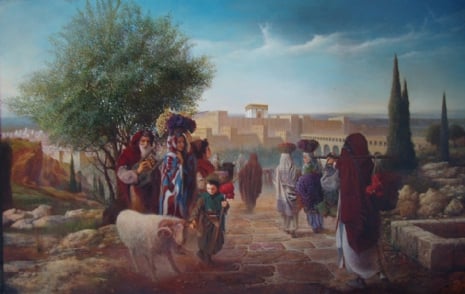
Offering thanks to G-d through Bikkurim was a joyful experience. Following the Torah instruction to rejoice upon bringing Bikkurim to the Temple, communities would travel to Jerusalem with much pomp and ceremony, in an atmosphere of gladness and contentedness.
So long as there was one Jewish family not yet settled in the land, none of the Israelites were truly content and happy and the mitzvah of Bikkurim could not be observed properly.
As we prepare to receive the Torah anew this year on Shavuot, remember the message of Bikkurim. We are a people intrinsically connected to each other, and the success of another is the source of our true happiness.