

It was time to find a suitable match for Yitzchok. The miracle baby – born to Avraham and Sarah at the advanced ages of 100 and 90 respectively – the first Jew circumcised at eight days and a consecrated “sacrifice” to G-d. Avraham knew by way of prophecy that the lucky girl was a relative somewhere in Charan – his former homeland.
He dispatched Eliezer, his devoted servant, to the foreign land, granting him power of attorney to negotiate with the family.
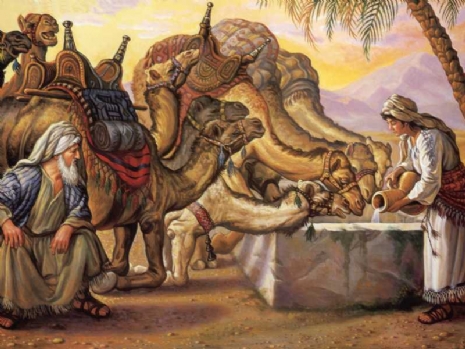
Arriving at his destination at dusk, he positioned his caravan of ten camels near the well at the outskirts of town and offered a prayer to G-d requesting success in his mission in the merit of Avraham.
“Here I stand by the spring of water, and the daughters of the townsmen are coming out to draw water. Let it be that the maiden to whom I shall say, ‘Please tilt your pitcher so that I may drink,’ and she replies, ‘Drink, and I shall give water to your camels as well,’ will be the one You have designated for Your servant Yitzchak.”
The test was straightforward. Avraham was the paragon of kindness and generosity and trained his family to be the same. Only a girl gifted with a natural sense of benevolence and goodness would be worthy of joining the family and mothering the future of the Abrahamic legacy.
Now, consider this important nuance that is often overlooked. Eliezer will only request a drink for himself. If she graciously offers him a drink alone as he requested and does not do the same for the rest of his entourage, she will have failed.
Avraham’s kindness was not limited to those who entered his tent. He actively searched out ways to help others. As we learned in last week’s parsha, three days after his circumcision he begged three reluctant travelers to avail themselves to his hospitality.
Eliezer therefore searched for the maiden who would take the initiative.
The rest is history. Even before completing his prayer, he noticed Rivkah, the beautiful daughter of Avraham’s nephew Besuel, approaching the well and she passed the test with flying colors.
We are all obligated to influence change for the good and many wonder how they can do so. Rivkah teaches us that being ready to help when called upon is not enough. We need to search out opportunities to help another.
Interest yourself in the needs of your friends and neighbors and seek ways to alleviate their financial or emotional pressures. Start up new friendships and nurture old ones without being prompted. Share your knowledge of Torah and the joy of a mitzvah to those who know less and see how gratifying it is.
When we all take the initiative in the proper direction, we will prepare the world for an era when peace, harmony, kindness and graciousness will abound.